
Industrial Epoxy Flooring
in Mexico, MO
Heavy-duty floor coating systems selected for your facility’s actual traffic, equipment, and chemical exposure.
Industrial Floors Take a Beating So Your Operation Doesn't Have To
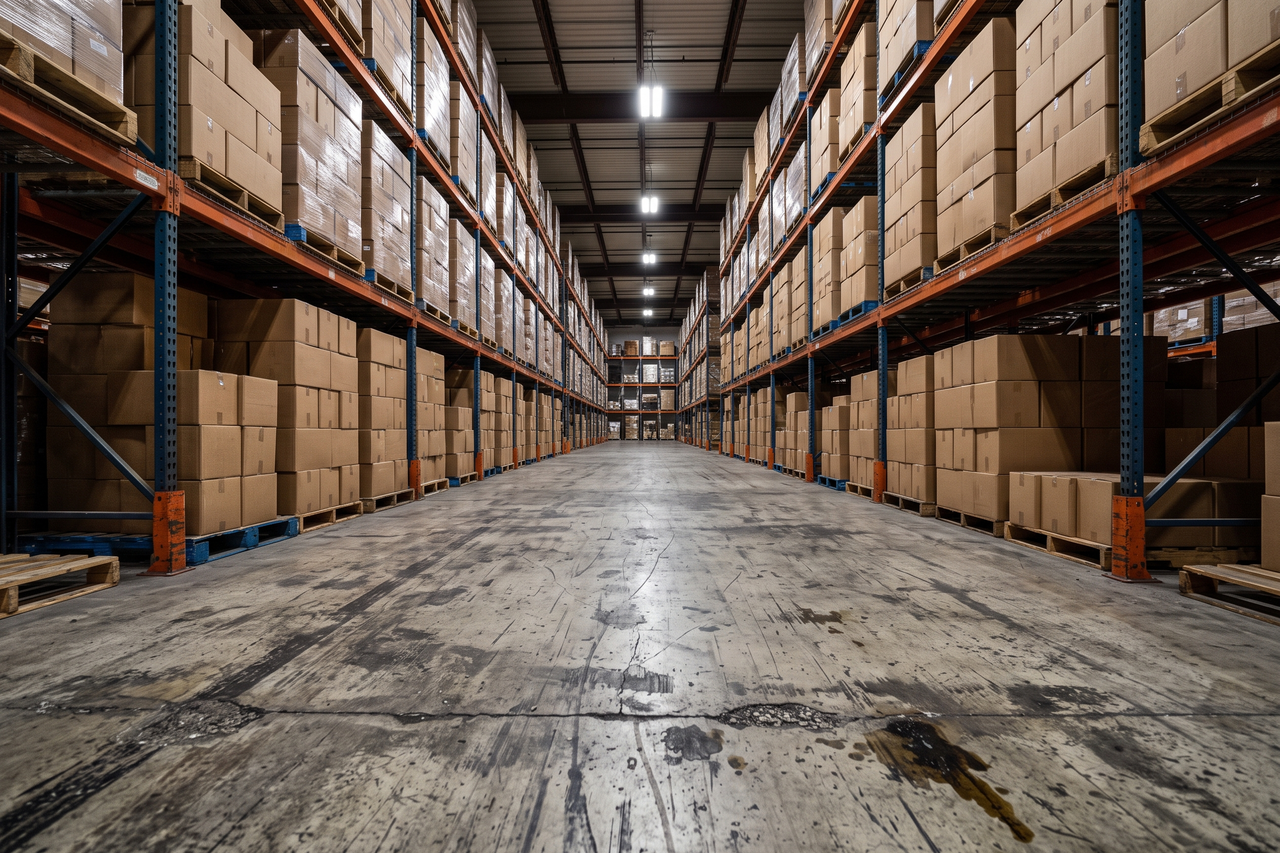
In a warehouse, plant, or distribution space, the floor absorbs everything: forklift and pallet-jack traffic, dropped parts, rolling loads, spills, and constant wear.
Unprotected concrete breaks down under that load. It dusts, pits, cracks, and stains, and the damage spreads into equipment, product, and cleaning time.
A floor in poor condition does more than look rough. It slows work down, complicates cleaning, and can create hazards for the people working on it.
Your Operation Decides the Flooring System
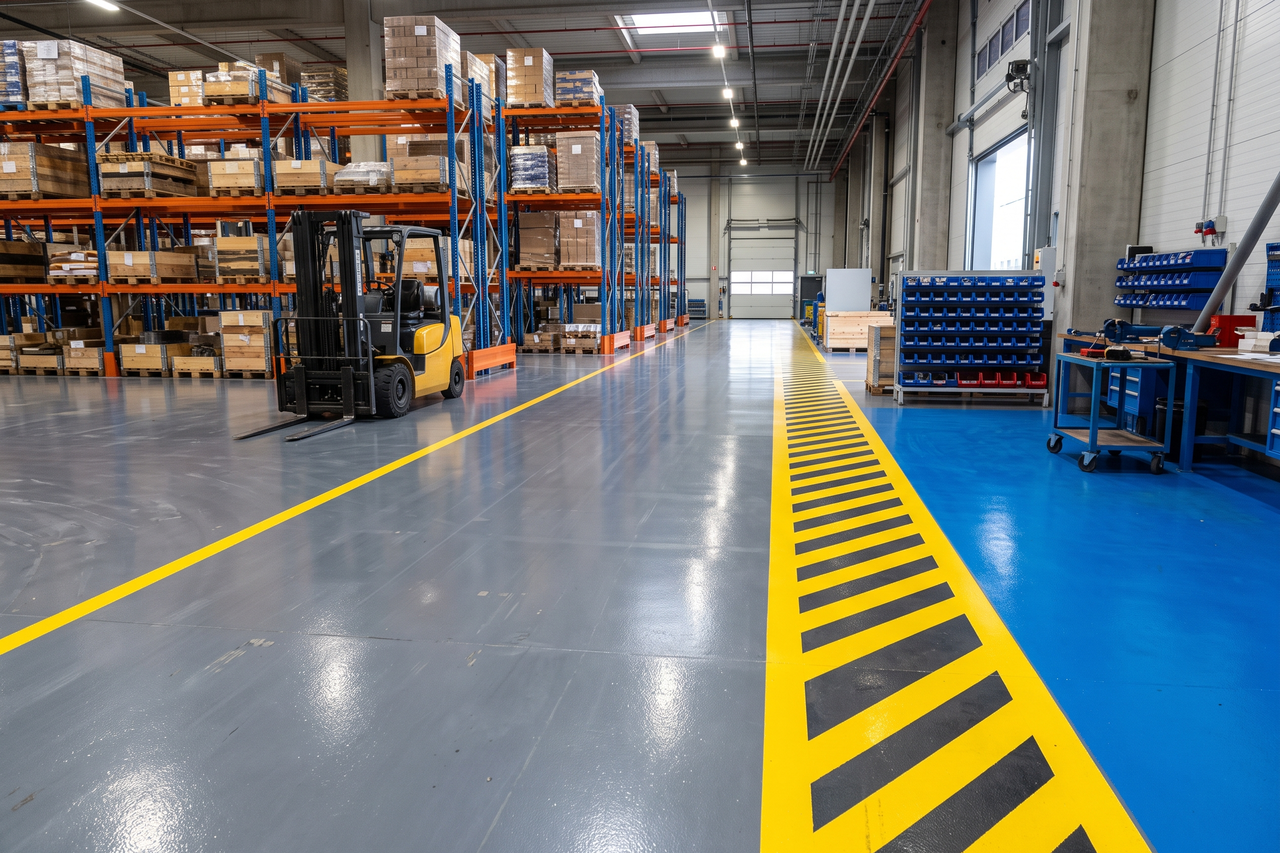
No single coating fits every facility. The right system depends on the type and weight of traffic, the chemicals or fluids on the floor, temperature swings, cleaning methods, and whether you need safety striping or designated work zones.
The flooring contractor evaluates the concrete and the way the space is used, then recommends a system with the thickness, chemical resistance, and texture your floor needs.
Line striping, color-coded zones, and textured finishes can be built into the system to help organize traffic and improve footing.
A Flooring Plan That Works Around Your Facility
Industrial projects need planning, not guesswork.
01
Assess the Facility
The contractor looks at the slab, the traffic, and the conditions the floor has to handle.
02
Build the Flooring Plan
The contractor matches a coating system to your operation and plans preparation and scheduling.
03
Put the Floor Back to Work
The system is installed and cured, then returned to service on a schedule your installer confirms based on the selected system and project conditions.
Need a Floor That Can Handle a Tougher Environment?
Tell us about your facility, the traffic it sees, and what the floor needs to withstand. We’ll connect you with a flooring contractor to identify the right system and prepare an estimate.
When an Industrial Floor Fails, the Problem Spreads
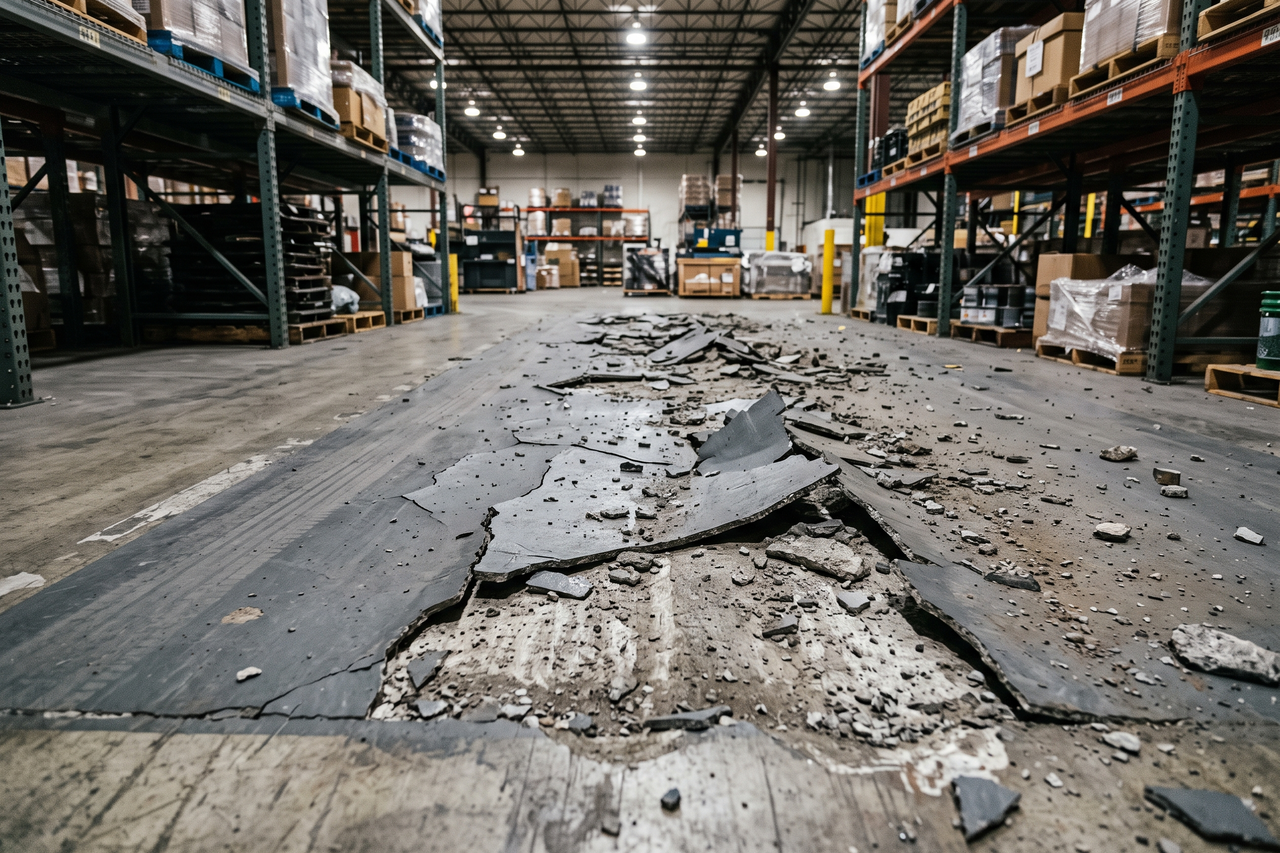
Industrial floor failures rarely stay small. Pitting and cracks catch wheels and damage equipment, and delaminated coatings create debris and uneven surfaces.
Deteriorating floors are also harder to clean, which matters in facilities where sanitation or dust control is part of daily work.
Repairing a failed industrial floor often means shutting down areas, relocating equipment, and grinding off the old coating before a new system can go down. The right system and proper preparation from the start help reduce that risk.
A Floor That Keeps Pace With Daily Operations
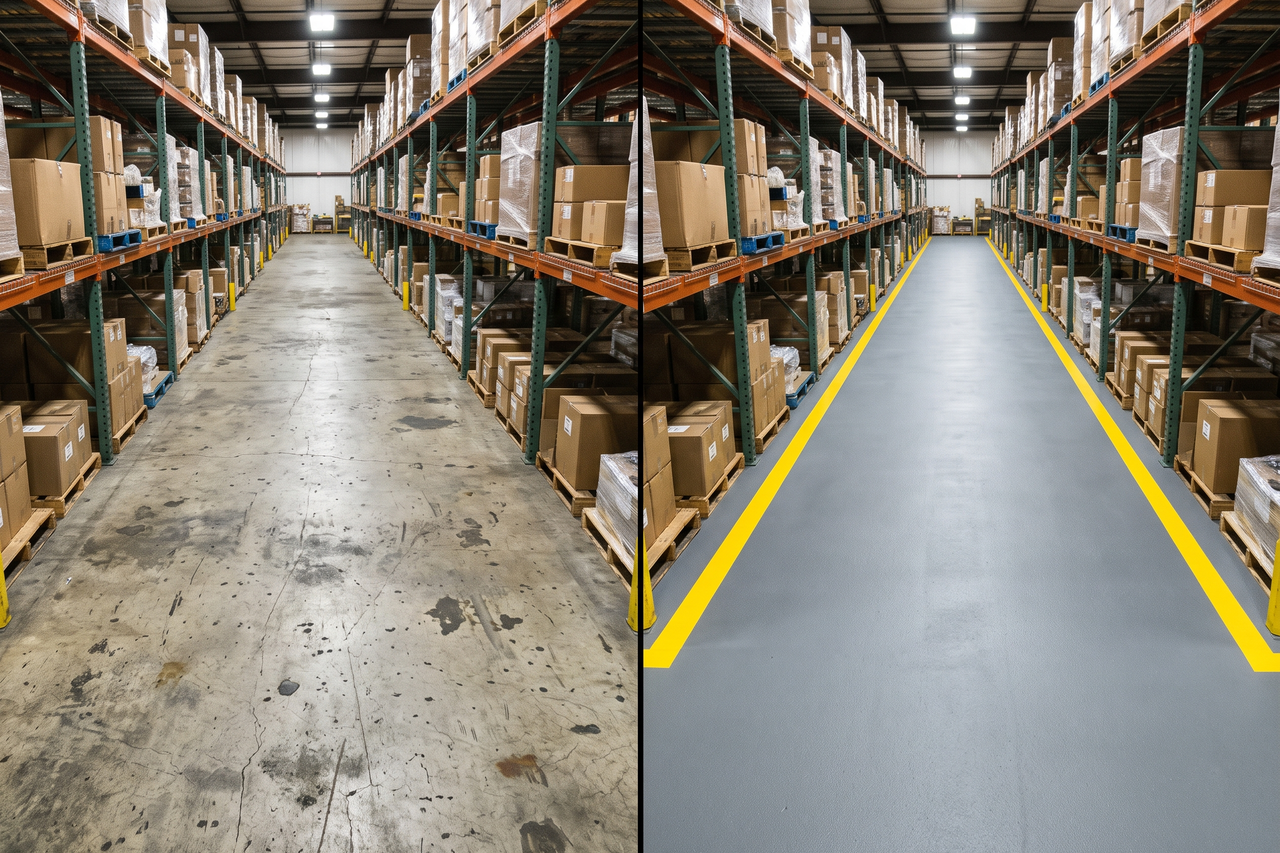
A properly selected industrial coating resists abrasion, impact, and many common chemicals, protecting the concrete underneath.
A sealed floor is faster to clean, produces far less concrete dust, and gives a brighter work environment. Marked lanes and zones make traffic patterns clear.
The floor becomes part of an efficient operation instead of something the team has to work around.
What Does Industrial Epoxy Flooring Cost?
Industrial flooring costs depend on the size of the facility, the condition of the slab, the preparation and repair needed, the system’s thickness and chemical resistance, striping and zoning, and scheduling requirements such as phased work or shutdown windows.
Because each operation has different demands, pricing is based on an evaluation of your facility. The contractor assesses the space and prepares an estimate tied to how the floor will be used.
Industrial Epoxy Flooring Questions
Can industrial epoxy handle forklift traffic?
Industrial coating systems are designed for heavy traffic, including forklifts and pallet jacks, when the right system is installed at the right thickness over properly prepared concrete.
Is industrial epoxy resistant to chemicals and oils?
Many industrial systems resist oils, fuels, and a wide range of chemicals. Resistance varies by product, so exposure should be identified before selecting a system.
Can safety lines and work zones be added?
Yes. Line striping, color-coded zones, and textured finishes can be incorporated to mark aisles, walkways, and work areas.
How much downtime should we plan for?
It depends on the size of the area, the preparation required, and the coating system. Some systems return to service faster than others, and phasing a larger facility may be possible depending on the project and the contractor. The schedule should be set during planning.