
Epoxy Garage Flooring
in Mexico, MO
A clean, durable garage floor that finally matches the rest of your home.
Your Garage Floor Shouldn't Be the Roughest Surface in the House
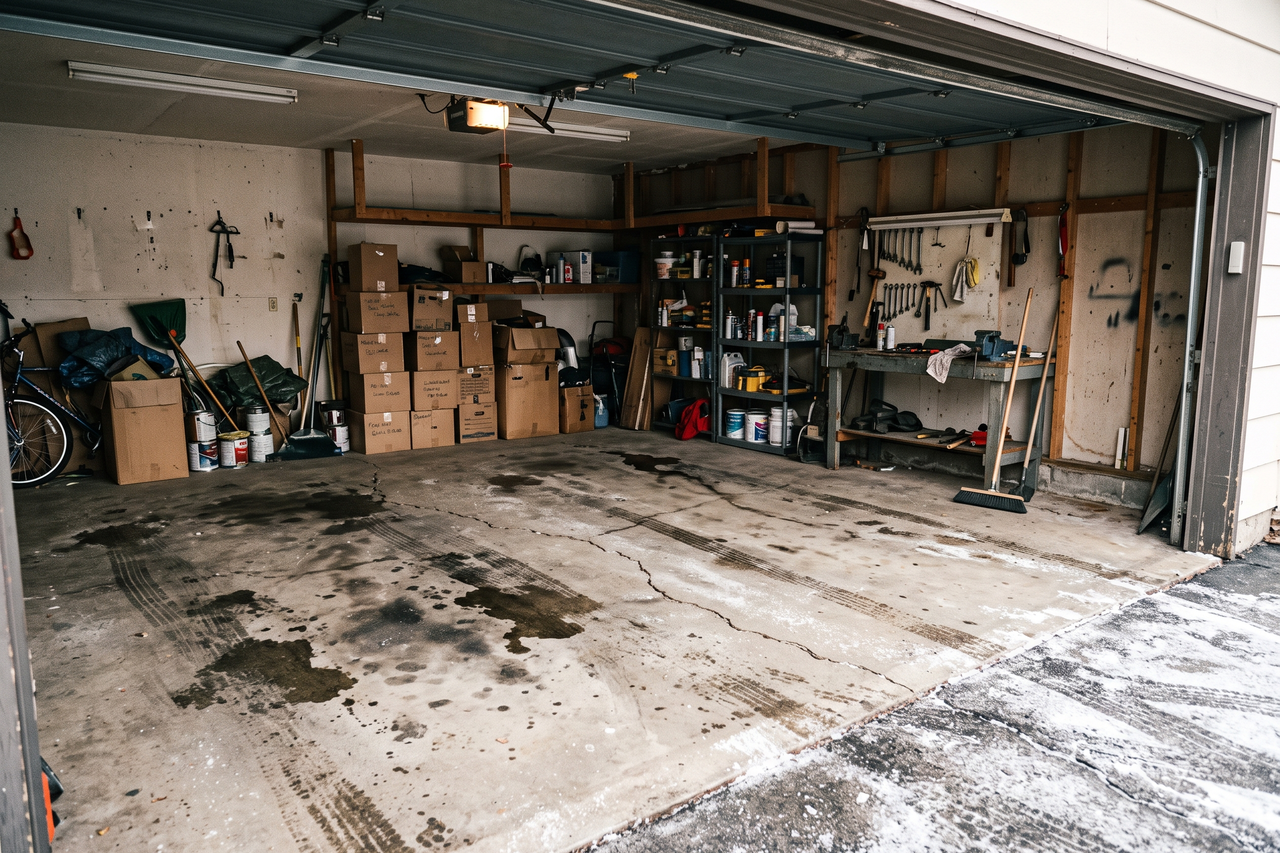
For a lot of households, the garage is the front door they actually use. You walk through it every day, yet the floor underfoot is often the one surface nobody has ever finished: oil drips, tire marks, winter residue, and a film of concrete dust that never quite sweeps away.
Bare concrete is porous. Spills soak in and set, and grit gets tracked straight into the house.
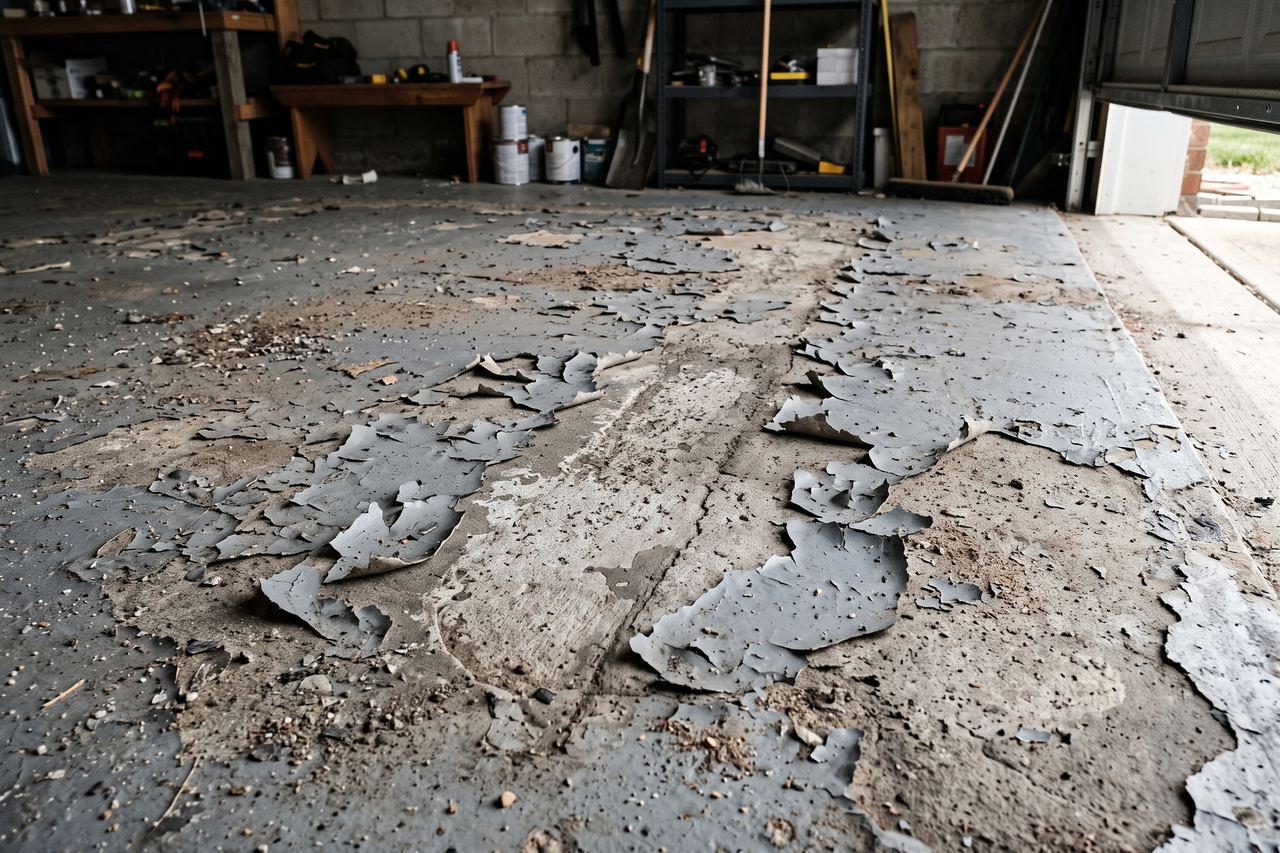
Paint and store-bought kits look like an easy fix, but thin coatings over unprepared concrete are prone to peeling and lifting once hot tires and daily wear go to work on them.
Picking a Garage Coating Shouldn't Take a Weekend of Research
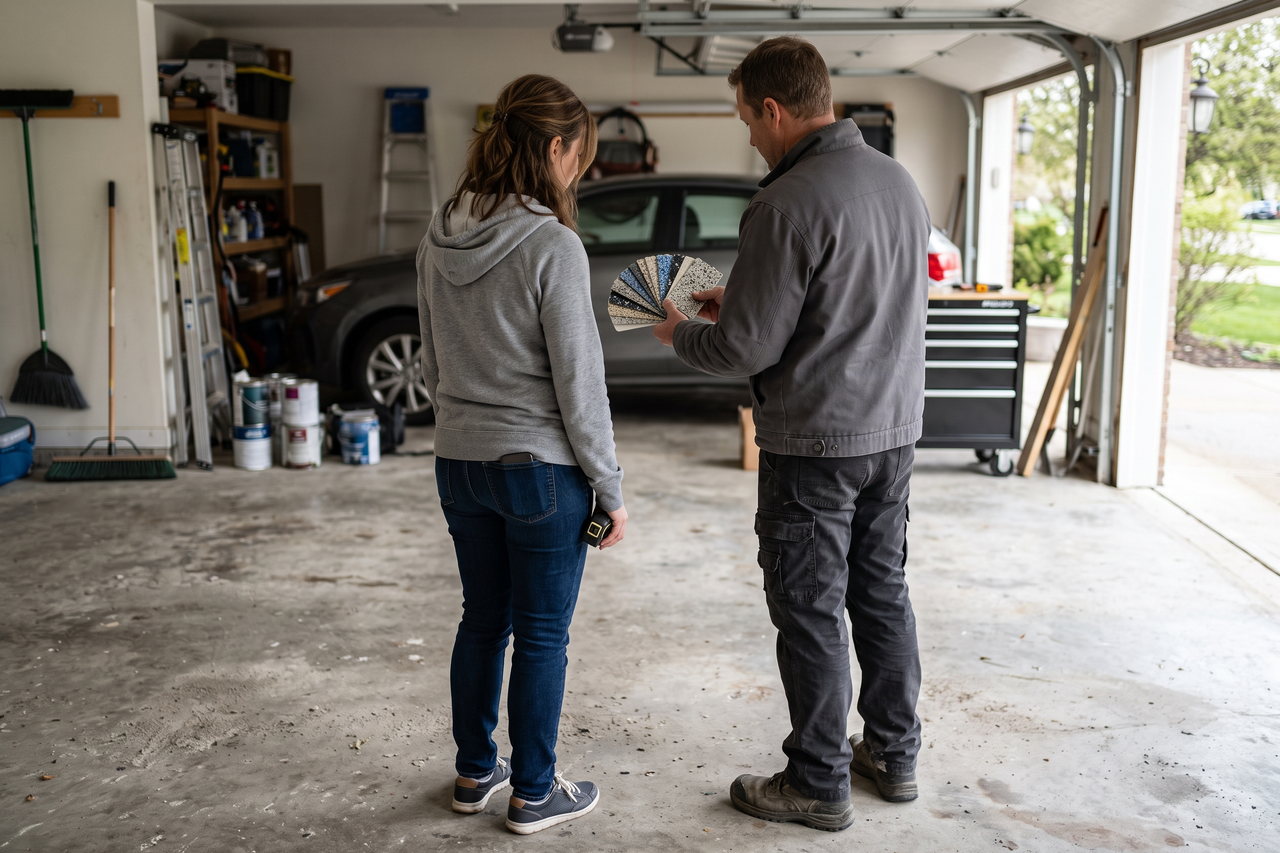
Epoxy, polyaspartic, flake, metallic, clear topcoats: the options pile up fast. The right answer depends on the condition of your slab, how you use the garage (parking, workshop, home gym, storage), how much sunlight reaches the floor, and how soon you need it back.
The process starts with the concrete itself. Your flooring contractor checks for cracks, old coatings, and signs of moisture, then recommends a system and finish that fit. Decorative flake blends add texture and help hide everyday dust. Metallic epoxy creates a high-gloss, one-of-a-kind look for garages that double as showpieces.
From Bare Concrete to Finished Garage in Three Steps
A simple process from the first conversation to the day you park on it.
01
Walk Us Through Your Garage
Tell us how you use the space and what the floor looks like today.
02
Pick Your System and Finish
Your contractor recommends a coating and helps you choose a color, flake blend, or metallic look.
03
Park on a Floor You're Proud Of
The contractor prepares the concrete, installs the coating, and lets you know when it’s ready for vehicles.
Wondering What Your Garage Could Look Like?
Tell us about your garage and how you use it. We’ll connect you with a flooring contractor who can recommend a coating system and finish and put together a customized quote.
A Bargain Garage Coating Can Turn Into a Double Expense
DIY kits and quick paint jobs are tempting because the upfront cost is low. The trouble is that thin coatings over concrete that hasn’t been properly prepared are vulnerable to hot-tire pickup, flaking, and peeling.
Once a coating starts failing, it usually has to be ground off before anything new can go down. That means paying to remove the old floor and then paying again for the new one.
Choosing a system that matches the garage and investing in proper preparation up front is often the less expensive path over the life of the floor.
A Garage That Feels Like Part of the House
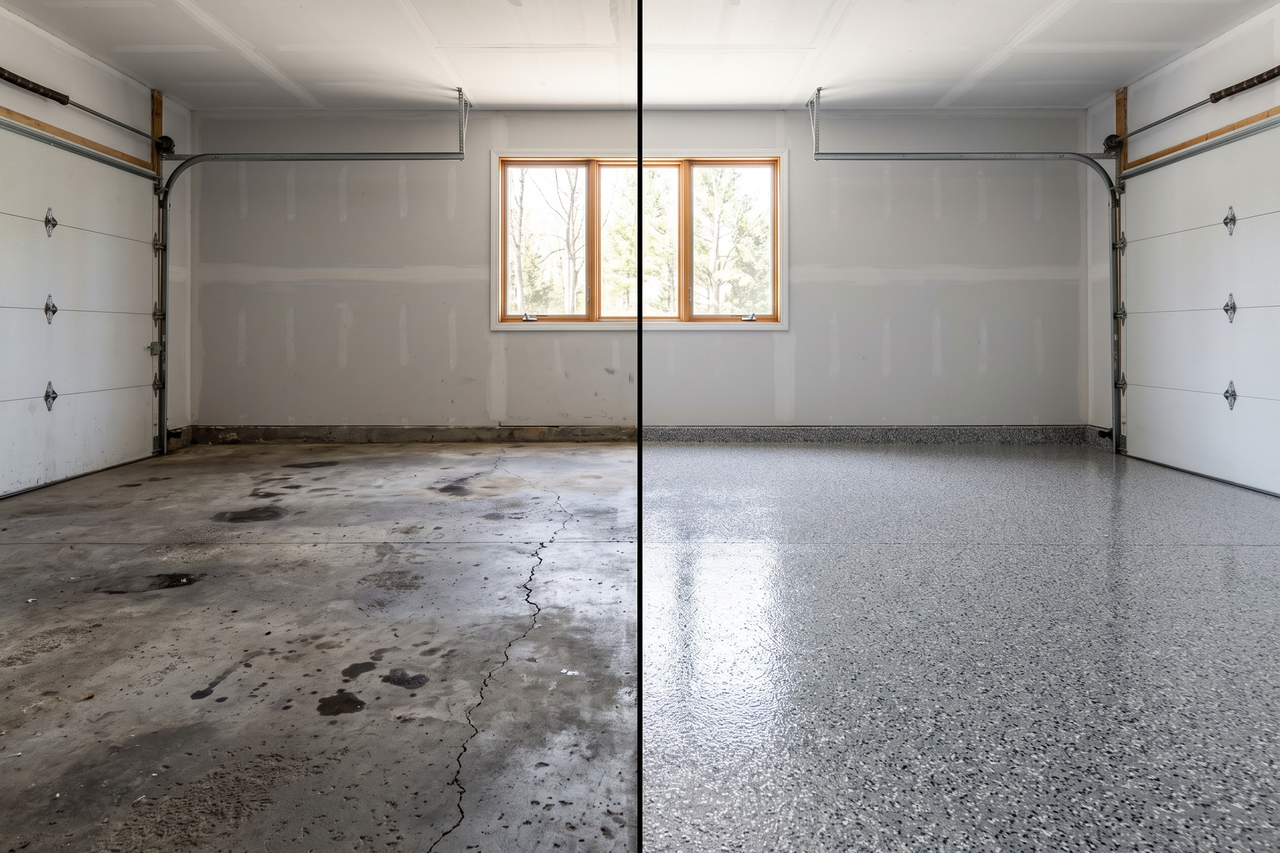
A sealed garage floor is easier to live with. Oil, salt, and road grime sit on the surface instead of soaking in, so cleanup is a quick wipe or mop.
The space looks brighter and more organized, and it becomes more usable, whether that means a workshop, a home gym, or simply a cleaner place to park.
Instead of walking past a stained slab every day, you come home to a garage that feels finished.
What Does Garage Floor Coating Cost?
The price of a garage floor depends on its size, the condition of the concrete, how much repair and preparation it needs, the coating system, and the finish you choose. Solid color, decorative flake, and metallic finishes each carry different material and labor costs.
The most reliable number comes from looking at your actual floor. After the contractor evaluates the concrete and talks through your goals, you’ll get a customized quote with no guesswork.
Your Garage Floor Questions, Answered
Will a garage floor coating hold up to hot tires?
Professional-grade coating systems applied over properly prepared concrete are designed to resist hot-tire pickup much better than garage floor paint or DIY kits. Surface preparation and system selection both play a role.
Can a garage floor with cracks or oil stains be coated?
Usually, yes. Cracks and surface damage are repaired during preparation, and oil-contaminated areas are cleaned and treated before coating. Heavily saturated concrete needs a closer evaluation first.
Will the floor be slippery?
High-gloss finishes can be slick when wet. Decorative flake adds texture, and anti-slip additives can be mixed into the topcoat for more traction where it’s needed.
When can I park in the garage again?
It depends on the coating system and the conditions during curing. Some systems allow vehicle traffic sooner than others, and your installer should explain the expected schedule before work begins.