
Epoxy Floor Repair
Cracked, chipped, or peeling epoxy doesn’t always mean starting over. Here’s how damaged coatings are evaluated and repaired, and how to tell when a full recoat makes more sense.

The Short Answer
Many epoxy floor problems can be repaired, including small chips, localized cracks, and isolated peeling. The right fix depends on how widespread the damage is and what caused it. If a coating is failing across large areas, because of poor preparation or moisture for example, removing it and installing a new system is often the more reliable long-term solution.
Common Epoxy Floor Problems
Here are three common problems that can affect an epoxy floor.
01
Cracks and Chips
Impacts, dropped tools, and slab movement can crack or chip a coating, sometimes down to the concrete.
02
Peeling and Delamination
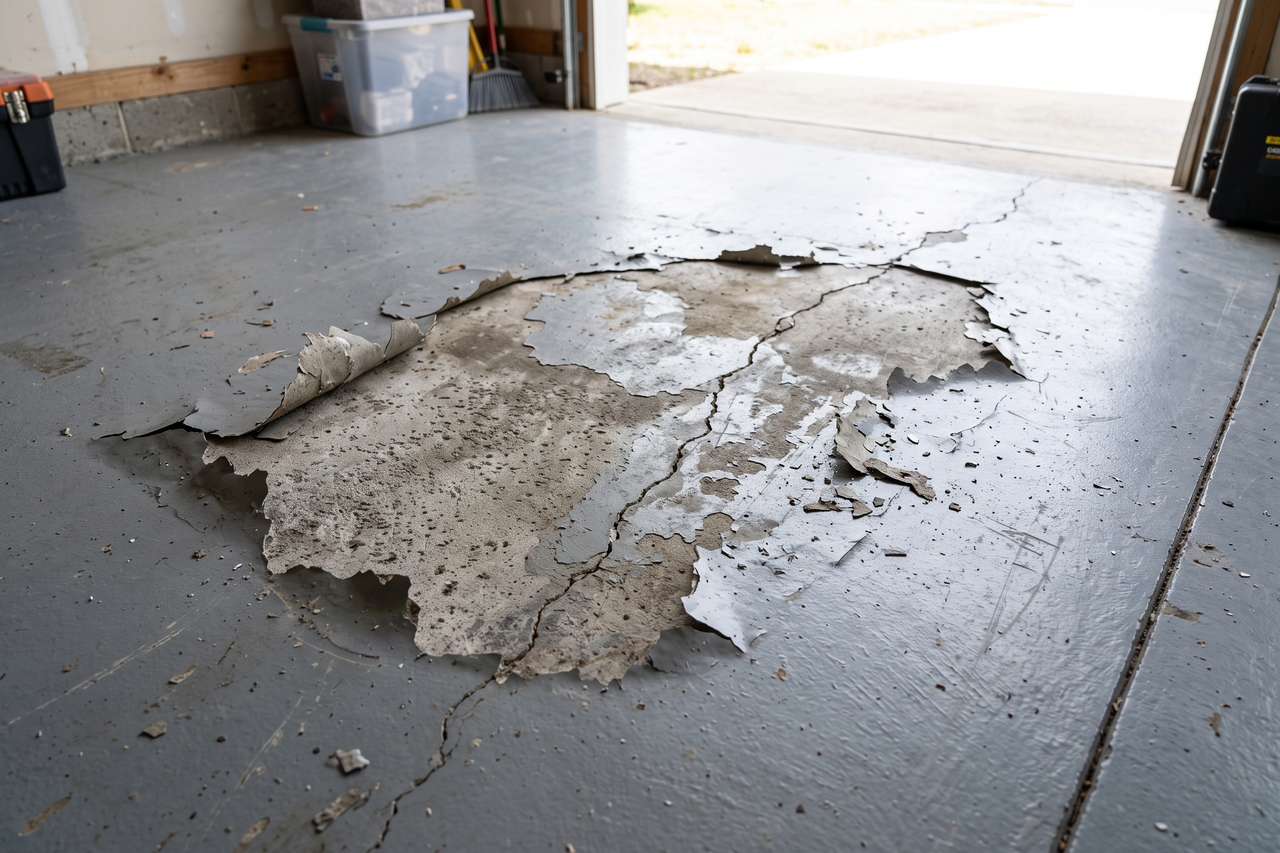
Sections of coating lift or flake away, often because of weak adhesion to the concrete underneath.
03
Stains and Surface Wear
Hot-tire marks, chemical stains, scratches, and dulling wear down the topcoat over time.
How Are Peeling or Damaged Epoxy Floors Repaired?
Repair usually starts by removing loose or failing coating around the damaged area until only well-bonded material remains. The exposed concrete and the edges of the surrounding coating are then ground to create a surface the repair can bond to.
Cracks and gouges in the concrete are filled. The repair area is then re-coated and, where possible, blended into the existing floor. Exact color and texture matching can be difficult on older or faded coatings, so some repairs remain visible.
Preparing the exposed concrete properly is just as important in a repair as in a new installation. Learn more in our guide to concrete preparation for epoxy flooring.
Repair or Replace: How Do You Know What Your Floor Needs?
Spot repairs usually make sense when the damage is limited and the rest of the coating is still firmly bonded. Small chips, a few cracks, or one damaged area can often be fixed without redoing the whole floor.
A full recoat or replacement is usually the better choice when peeling is widespread, when the coating is lifting in several places, or when the original installation skipped proper preparation. Patching a floor that’s failing everywhere tends to lead to more patching.
When a new system is the better answer, it helps to understand what a full installation involves. See our guide to epoxy floor installation.
How Much Does Epoxy Floor Repair Cost?
Repair cost depends on how much of the floor is damaged, what caused the failure, how much old coating has to come off, what condition the concrete is in underneath, and whether you’re patching an area or recoating the entire floor.
Small, localized repairs generally cost less than a full recoat. Extensive removal and replacement can approach the cost of a new installation. The most accurate way to price a repair is to evaluate the floor in person.
What Causes Epoxy Floors to Fail, and How Can You Prevent It?
Improper Concrete Preparation
Coatings applied over unground, dirty, or sealed concrete often have a weak bond and are more likely to peel. Mechanical grinding and thorough cleaning before coating help prevent this. See concrete preparation for epoxy flooring.
Excess Moisture
Moisture moving up through a slab can cause bubbling, blistering, and delamination. Testing before installation, and choosing a moisture-tolerant system when needed, reduces the risk.
Heavy Impacts and Chemical Exposure
Dropped equipment, dragged loads, and harsh chemicals can damage coatings that weren’t selected for those conditions. Matching the system to how the floor will actually be used helps it hold up.
Improper Installation or Curing
Applying a coating outside recommended temperature or humidity ranges, mixing it incorrectly, or putting the floor back into service too soon can all weaken it. Following the product’s installation and cure requirements matters. Read more about epoxy floor installation.
Can Garage, Basement, and Commercial Epoxy Floors Be Repaired?
Garage Floors
Garage coatings often show hot-tire lifting, chips from dropped tools, and wear in driving lanes. Localized damage can often be repaired, while widespread lifting usually calls for a recoat. Learn more about garage floor coatings.
Basement Floors
Basement coating failures are frequently tied to moisture, so the cause should be identified before any repair. Otherwise the same problem can return. Learn more about basement epoxy flooring.
Commercial Floors
Commercial floors see heavy traffic and frequent cleaning, so worn traffic lanes and damaged areas are common. Whether repairs can be planned in sections to limit disruption depends on the project and the contractor. Learn more about commercial epoxy flooring.
Epoxy Floor Repair FAQs
Can you patch a small area of damaged epoxy?
Often, yes. When the surrounding coating is well bonded, a damaged spot can be removed, prepared, and re-coated. The patch may not match an older or faded floor exactly.
Why is my epoxy floor peeling?
Common causes include inadequate concrete preparation, moisture in the slab, a coating too thin for the use, and hot-tire pickup on garage floors. Identifying the cause is the first step toward a lasting fix.
Can a new coating go over an old epoxy floor?
Sometimes. If the existing coating is well bonded, it can be abraded and recoated with a compatible system. If it’s peeling or failing, it usually needs to be removed first.
Can cracks in the concrete come back after repair?
They can. Cracks caused by ongoing slab movement may reappear through a coating over time, even after they’ve been filled.
How long does an epoxy floor repair take?
It depends on the size of the repair, the preparation needed, and the coating’s cure time. Your installer should explain the expected schedule before work begins.
Is it better to repair or recoat the whole floor?
If damage is limited and the rest of the coating is sound, a repair often makes sense. If peeling or lifting is widespread, a full recoat or replacement is usually more reliable.
Need Help With a Damaged Epoxy Floor?
Tell us what’s happening with your floor, and we’ll connect you with a flooring contractor who can assess whether a repair or a recoat makes sense and put together a customized quote for your project in Mexico, MO.