
Concrete Preparation for Epoxy Flooring
Much of what determines how a coating performs happens before the first coat goes down. Here’s what proper concrete preparation involves and why it matters.

The Short Answer
Preparing concrete for epoxy typically means cleaning and mechanically grinding the surface, repairing cracks and damage, and checking the slab for moisture and contamination. Together these steps give the coating a clean, sound, profiled surface to bond to. Skipping or rushing them is often part of the reason coatings peel, bubble, or lift.
The Three Core Steps of Concrete Preparation
Proper preparation typically comes down to three steps: cleaning and grinding the surface, repairing damage, and checking the slab for moisture and contamination.
01
Cleaning and Grinding
Oil, dirt, and old sealers are removed. The surface is then ground to open the concrete and create a profile the coating can grip.
02
Crack and Surface Repairs
Cracks, chips, spalls, and low spots are filled and leveled so defects don’t telegraph through the finished floor.
03
Moisture Testing and Inspection
The slab is checked for moisture and contamination that could affect how the coating bonds.
How Does Grinding Help a Coating Bond?
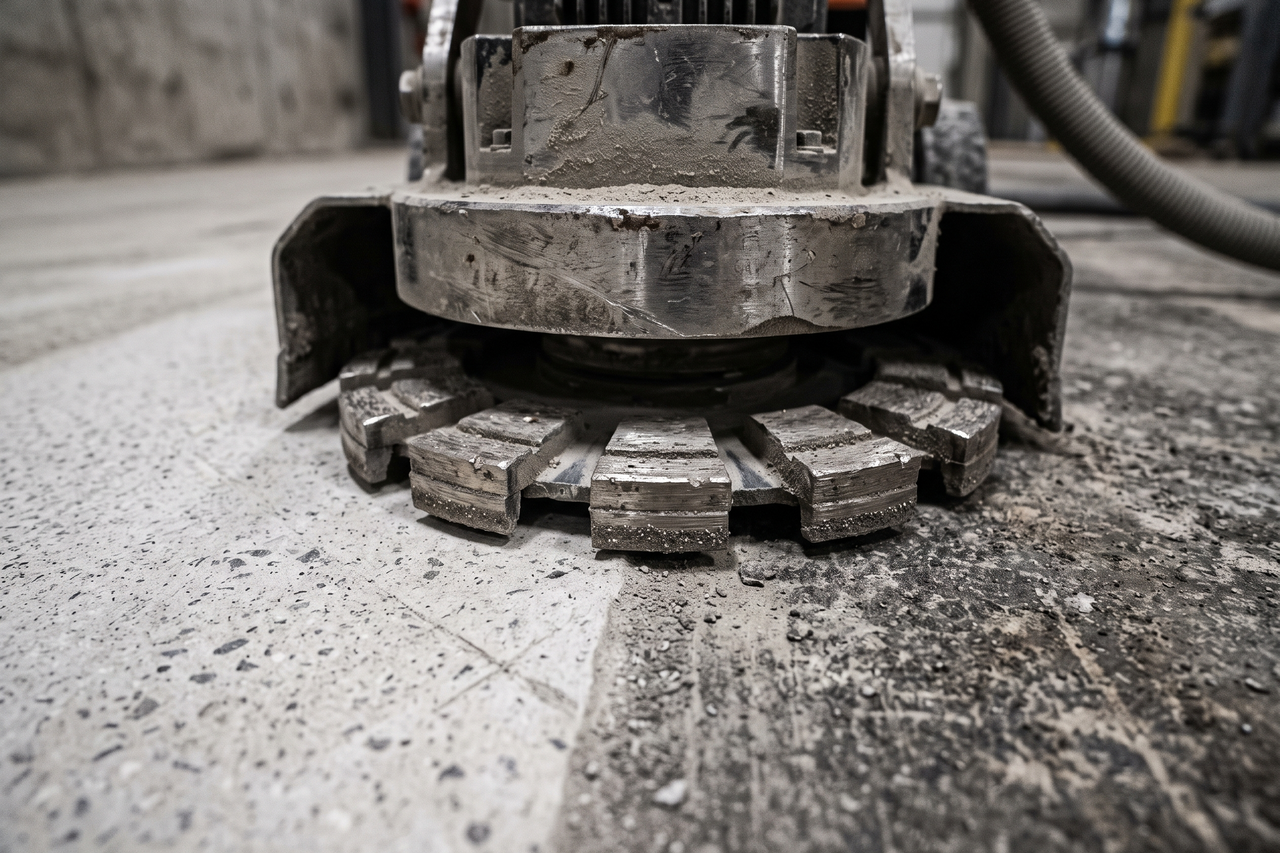
The top layer of most concrete slabs is smooth and relatively weak, and it often holds dirt, oil, or old sealer. A coating applied directly over it has little to grab onto.
Diamond grinding removes that layer and leaves a slightly textured surface, often described as a concrete surface profile. The primer can penetrate that profile and form a mechanical bond.
Acid etching is sometimes used as an alternative. For most professional coating systems, though, mechanical grinding gives a more consistent, controllable result.
Should Cracks Be Repaired Before Coating?
Yes. Coating over open cracks, chips, or spalled areas usually leaves visible flaws. Damaged edges can also become the place where a coating starts to fail.
Repairs are typically made after grinding, using fillers and patching materials that are compatible with the coating system. Some cracks come from ongoing slab movement and may reappear over time even after repair, so it’s worth discussing expectations up front.
If your floor already has a coating that’s cracking or peeling, see our guide to epoxy floor repair.
Why Is Moisture Testing Important?
Concrete is porous, and moisture can move up through a slab from below. That’s especially common in basements and in slabs without an effective vapor barrier.
Excess moisture can interfere with adhesion and lead to bubbling, blistering, or delamination. Testing helps identify when a moisture-tolerant primer or a different system is needed, or when the moisture source should be addressed first.
Can Epoxy Go Over Painted or Sealed Concrete?
Usually not directly. Paint, sealers, and many older coatings prevent a new coating from bonding to the concrete itself, and if the old layer fails, the new one goes with it.
In most cases the existing material is ground off down to sound concrete before the new system is applied. Some compatible coatings can be recoated after proper preparation, but that decision should follow an evaluation of what’s already on the floor.
How Should You Prepare Your Garage Before Installation?
Before a coating project, homeowners are typically asked to:
- Remove vehicles, storage, shelving, and anything sitting on the floor
- Clear wall-mounted items near the floor that could get in the way of edge grinding
- Point out known problem areas, such as oil stains, cracks, or spots where water collects
- Plan for the garage to be out of use through installation and curing
To see what happens once the space is ready, read our guide to epoxy floor installation.
Concrete Preparation FAQs
Can you apply epoxy to new concrete?
New concrete generally needs time to cure before coating. About 28 days is a commonly cited guideline, but moisture levels and the coating manufacturer’s requirements should guide the decision.
Is acid etching as good as grinding?
Etching can clean and slightly roughen concrete, but it’s harder to control and may leave residue. Mechanical grinding is generally preferred for professional coating systems.
How do you remove oil stains before coating?
Surface oil is cleaned and degreased, and heavily contaminated areas may be ground or treated further. Deeply saturated concrete may need extra attention before it will accept a coating.
Does grinding create a lot of dust?
Professional grinding equipment is typically paired with dust-extraction vacuums, which greatly reduce airborne dust compared with dry grinding alone.
Can a slab with moisture problems still be coated?
Sometimes. It depends on how much moisture is present and where it comes from. Moisture-tolerant primers can help in some cases, and in others the source needs to be addressed first.
Why does preparation take so long?
Grinding, repairing, cleaning, and testing a slab properly takes careful work. Preparation is often the most time-consuming part of a coating project, and one of the most important.
Want Your Floor Prepared the Right Way?
Tell us about your concrete and what you’d like to do with it, and we’ll connect you with a flooring contractor for a customized quote on your project in Mexico, MO.